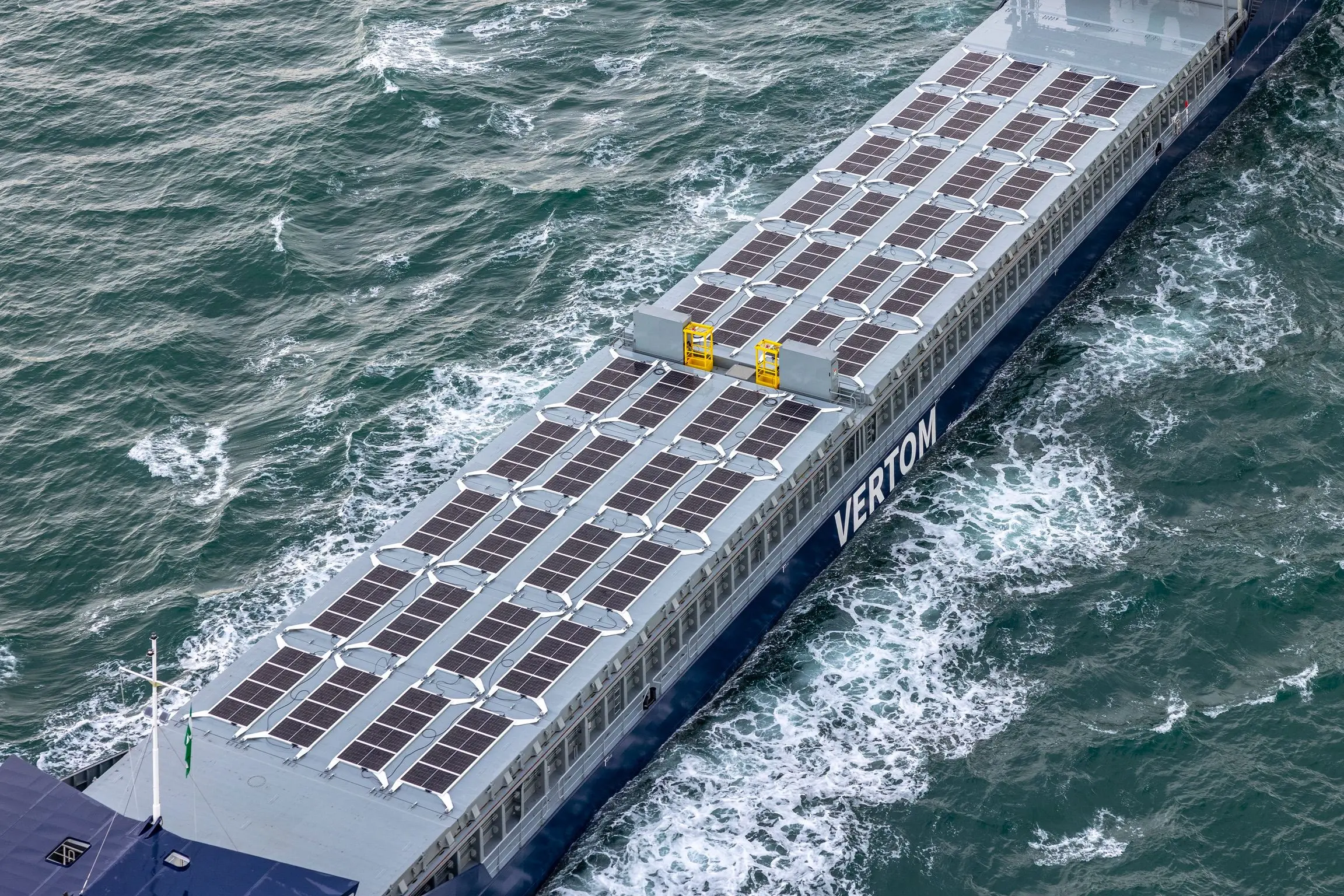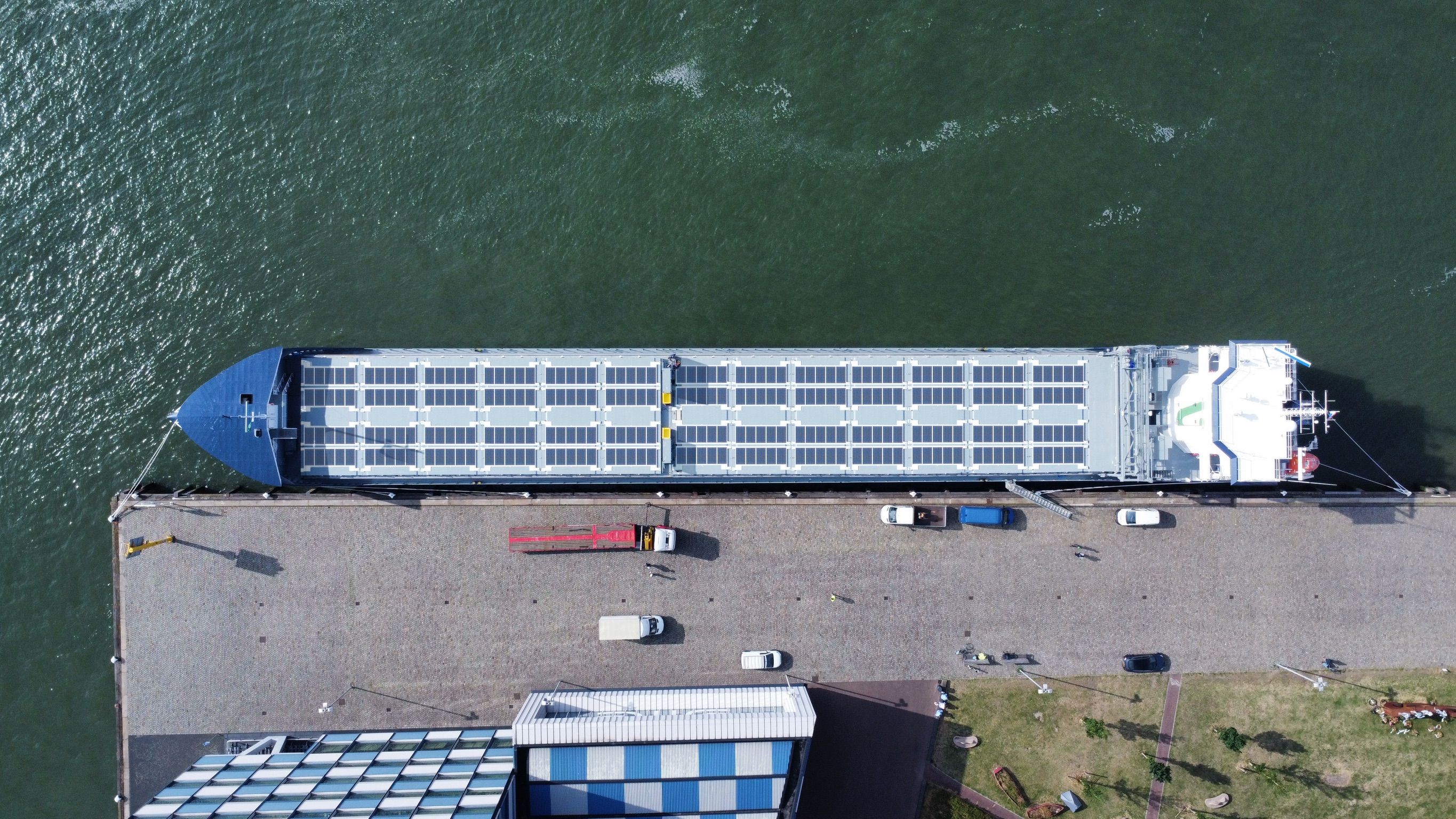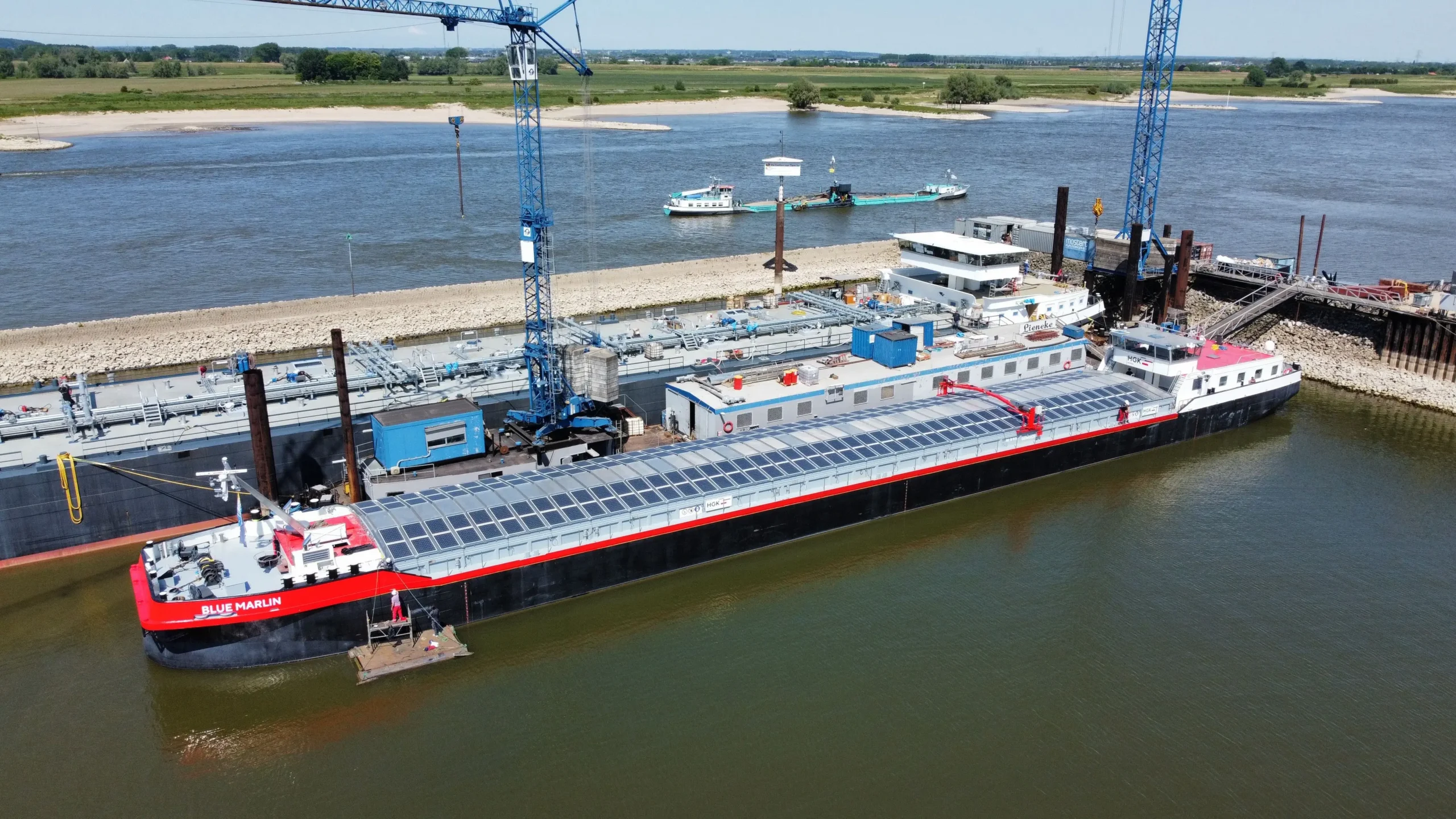
The world's first hybrid solar-powered inland shipping vessel.
Wattlab and HGK Shipping take another step forward. This time, the solar energy goes straight into the propulsion system.
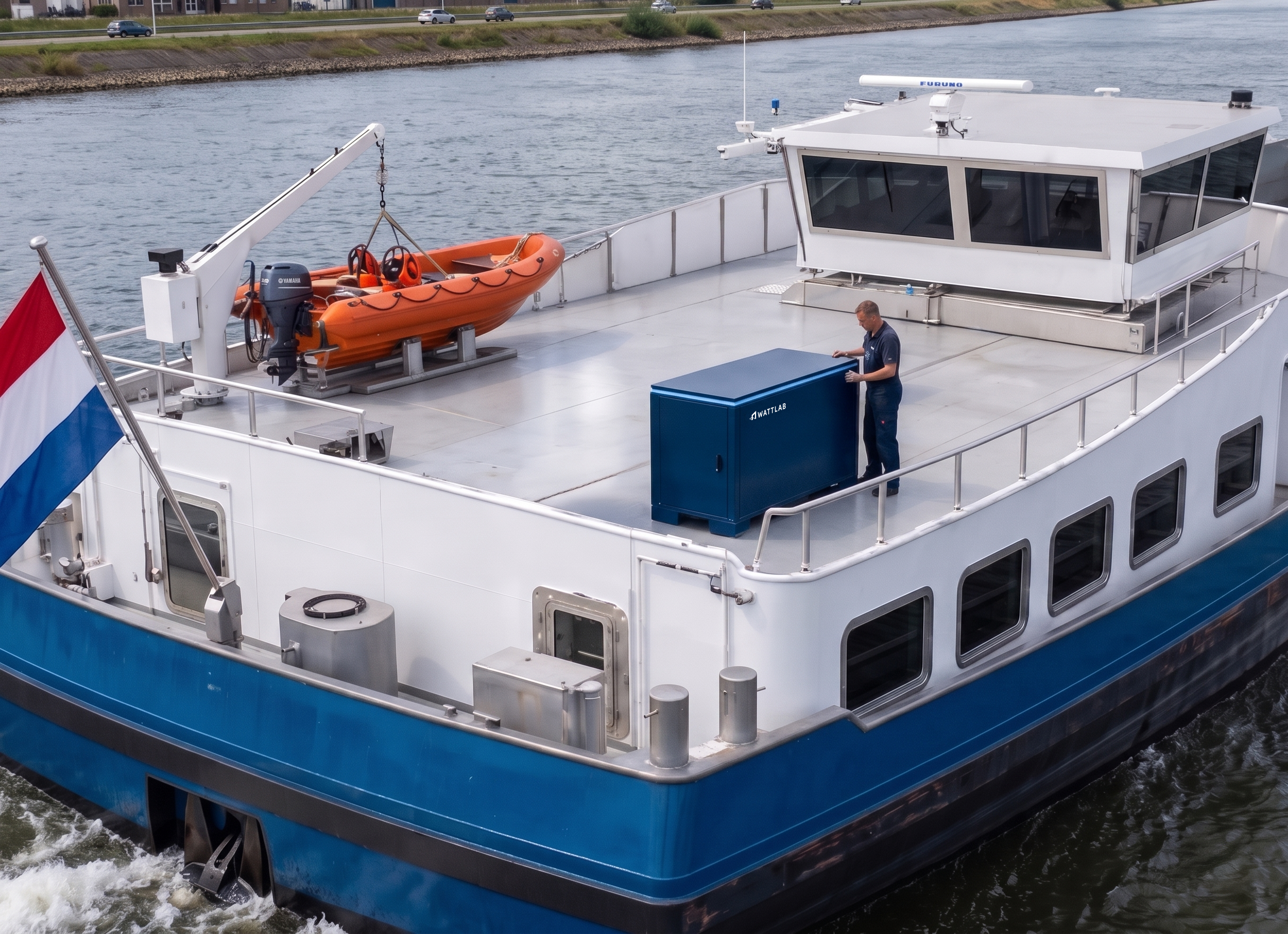
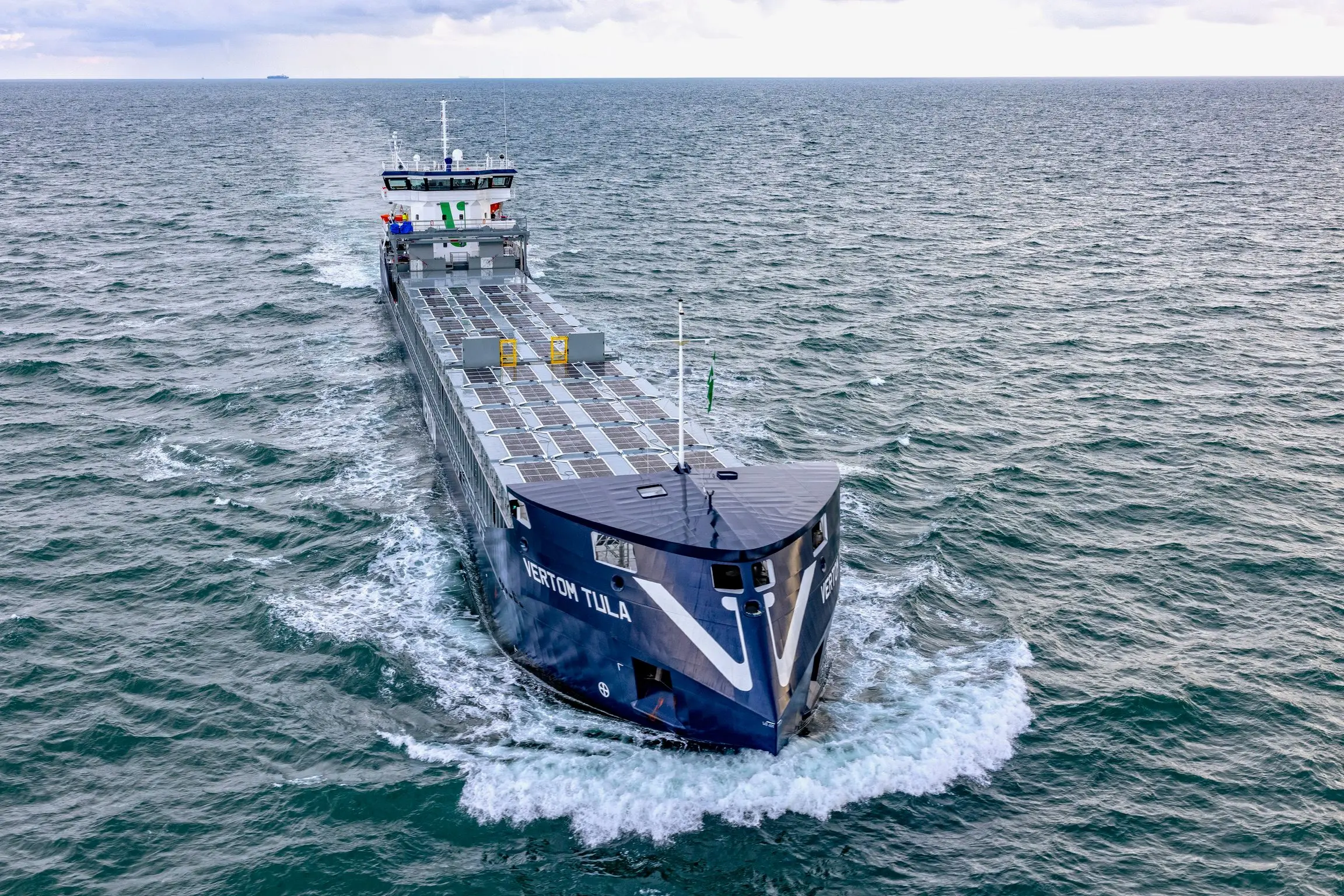
Wattlab has delivered a solar energy system for HGK Shipping's inland cargo vessel Blue Marlin. With 192 solar panels connected to both the onboard and propulsion systems, the Blue Marlin is now the first inland shipping vessel in the world capable of hybrid sailing with solar power. It is a significant technical milestone for sustainable inland shipping.
Wattlab and HGK Shipping have worked together before. In 2024, HGK's 135-metre dry cargo vessel MS Helios entered the Guinness Book of Records with the world's largest solar panel installation on an inland vessel. That system had 312 panels. The Blue Marlin goes a step further.
What makes this different
On the Helios, solar energy was used exclusively for low-voltage onboard systems. The Blue Marlin changes that. Its solar panels are connected to both the low-voltage hotel systems and the high-voltage electric propulsion network.
"HGK Shipping can proudly state that they are the first inland shipping company to operate a vessel that uses solar power directly for propulsion."
That is the assessment of Wattlab co-founder and COO David Kester. The system delivers up to 35 kilowatts under optimal conditions and works alongside four diesel generators. When solar output is high and demand is low, the system can prevent an additional generator from starting up. In certain conditions, the Blue Marlin may even sail on solar power alone for short periods.
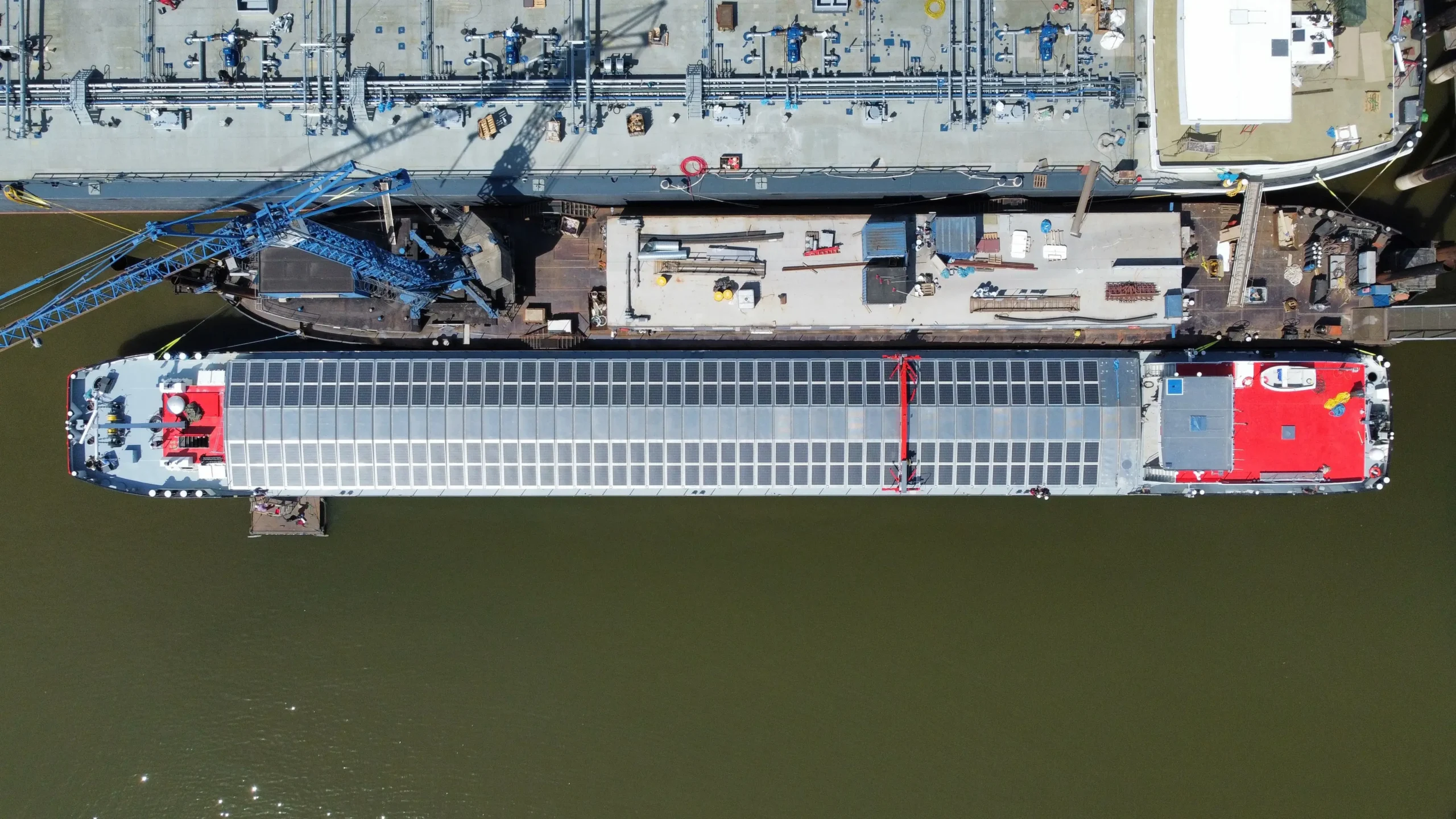
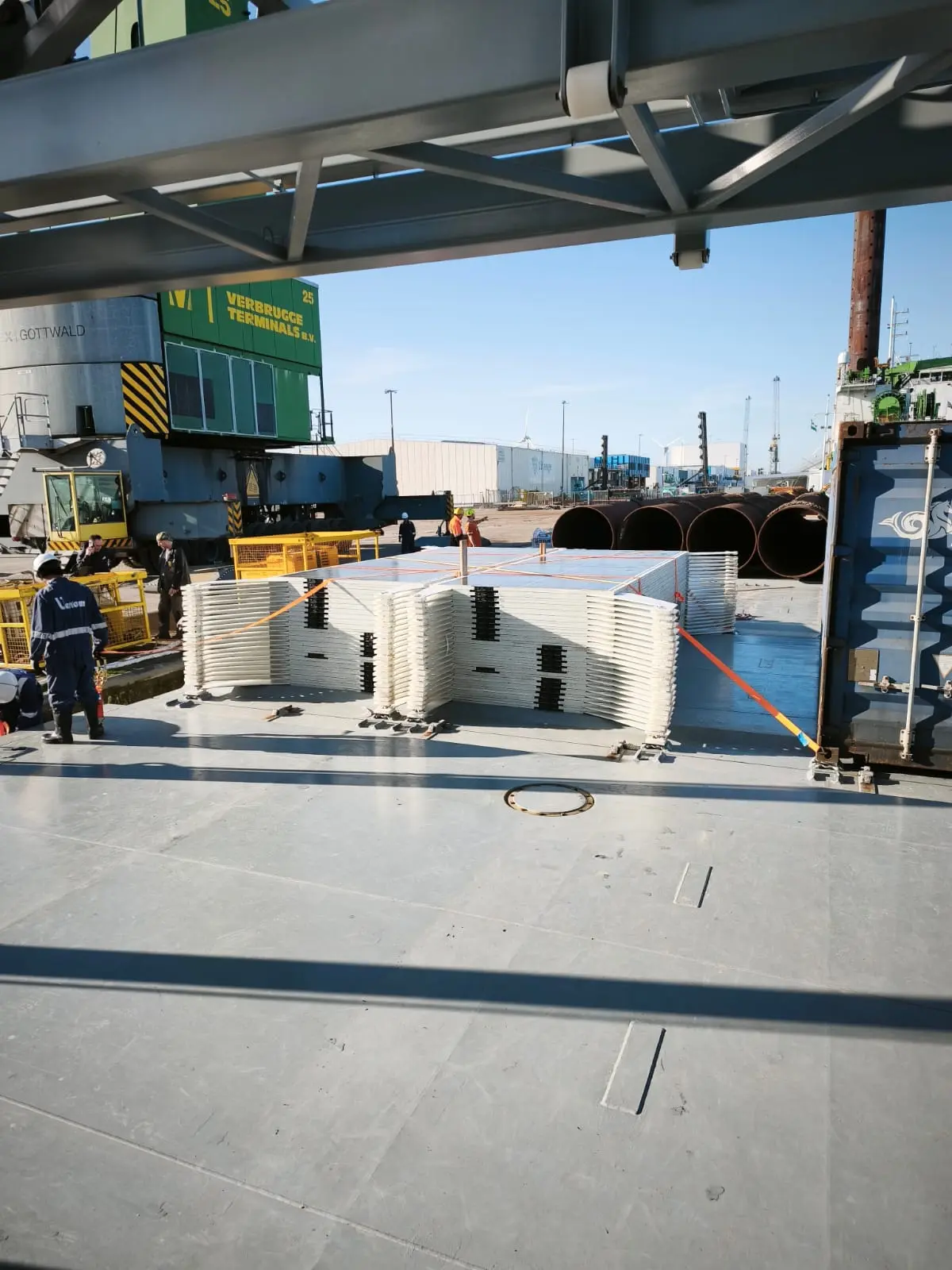
The Blue Marlin at De Gerlien van Tiem shipyard during installation.
Peak shaving and automated energy management
The system uses what is called peak shaving. When electricity demand on board spikes, the combination of solar energy and batteries steps in to cover that peak, so a fourth generator never needs to turn on. The energy management works automatically, distributing power where and when it is needed.
Kester sees even bigger potential when the ship is lightly loaded and travelling downstream. In those conditions, the vessel may be able to sail for limited periods using only solar power. That would be an unprecedented achievement in inland shipping.
Built with trusted partners
About the installation
Installation took place at De Gerlien van Tiem shipyard. Wattlab worked closely with Blommaert Aluminium and Van Tiem Electro. Because these partners have worked together on multiple vessels before, the process was well optimised. For the Blue Marlin as a new-build, installation took about one week, followed by a few days for commissioning. For a comparable retrofit project, Wattlab estimates maximum one week of downtime.
Tim Gödde, Director Ship Management at HGK Ship Management, calls the Blue Marlin a natural next step after the Helios. The Helios already showed what solar power can do for onboard systems. The Blue Marlin shows what it can do for the engine room. Gödde is clear about what this project means: "We are proud to pioneer the use of solar propulsion in inland shipping. The Blue Marlin demonstrates what is possible when innovation meets engineering expertise."
HGK Shipping is one of Europe's leading inland waterway operators, moving around 43 million tonnes of freight per year across a fleet of 350 vessels. This project is another step in their broader push to make that fleet more sustainable.
Ready to reduce your vessel's emissions?
No obligations. We will calculate your fuel savings and ROI for free.
Get in touchFrom the newsroom
Related articles