
Portfolio
Solar Systems for Ships
Wattlab designs and installs solar systems for ships across inland waterways, short-sea routes and deep-sea bulk carrier operations. These are the vessels running our technology today.
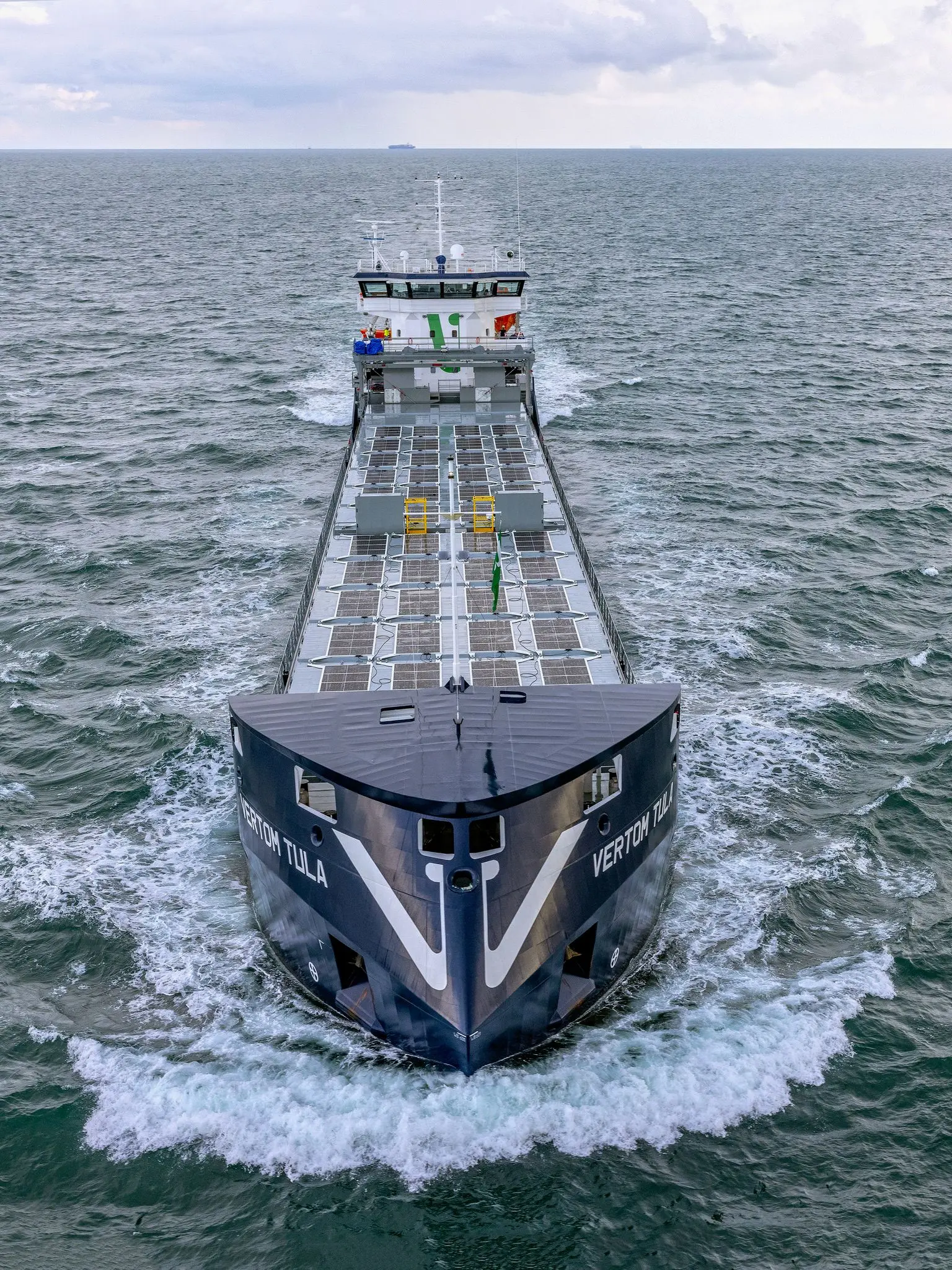
MV Vertom Tula, Solar System for a Short-Sea Ship
The Vertom Tula is the first sea-going vessel equipped with Wattlab's solar system for ships. The 79 kWp installation is split into four independent solar groups. These connect directly to the 400 V AC hotel load switchboard. Since the vessel has no batteries, a dedicated control system keeps feed-in at zero. It does this by engaging or disengaging solar groups based on the power demand at any given moment. In addition, the system measures output in real time and communicates with the vessel's AMCS via Modbus. As a result, load management is precise and integration with existing onboard systems is seamless. This reduces the load on the grid converters and diesel generators, so fuel efficiency improves and more power becomes available for propulsion.
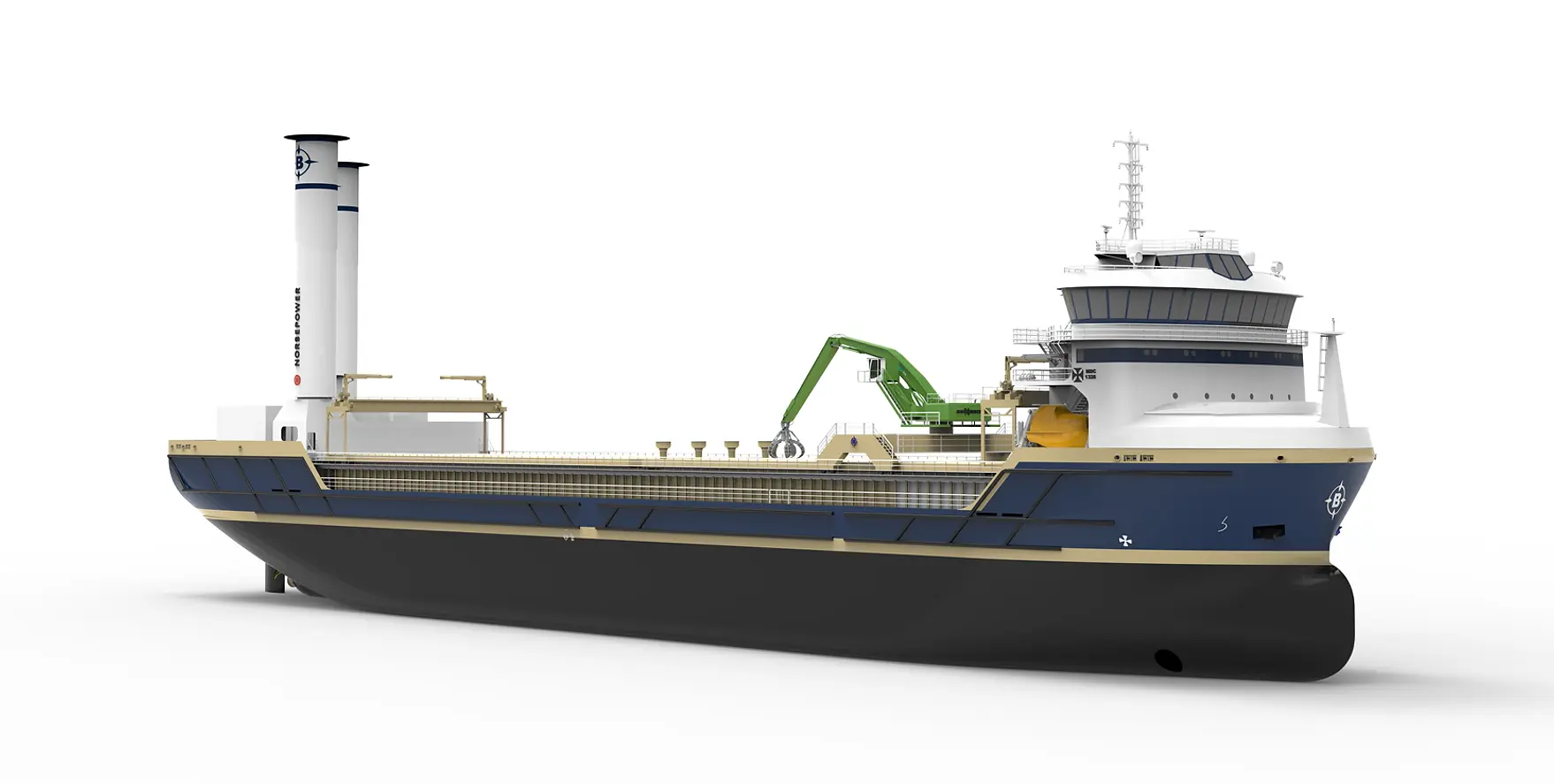
BRF Froan, Solar System for a Battery-Electric Bulk Carrier
BRF Froan will be the world's largest battery-powered bulk carrier. It sets a new benchmark in zero-emission maritime transport. The vessel is equipped with Wattlab's SFR system, which delivers 193.5 kWp of solar capacity across 86 units.
The solar installation supports the vessel's 23.5 MWh battery system. As a result, overall energy demand goes down and operational efficiency improves. Combined with shore power charging and advanced energy management, the SFR system makes fully electric, emission-free operation over long distances possible.
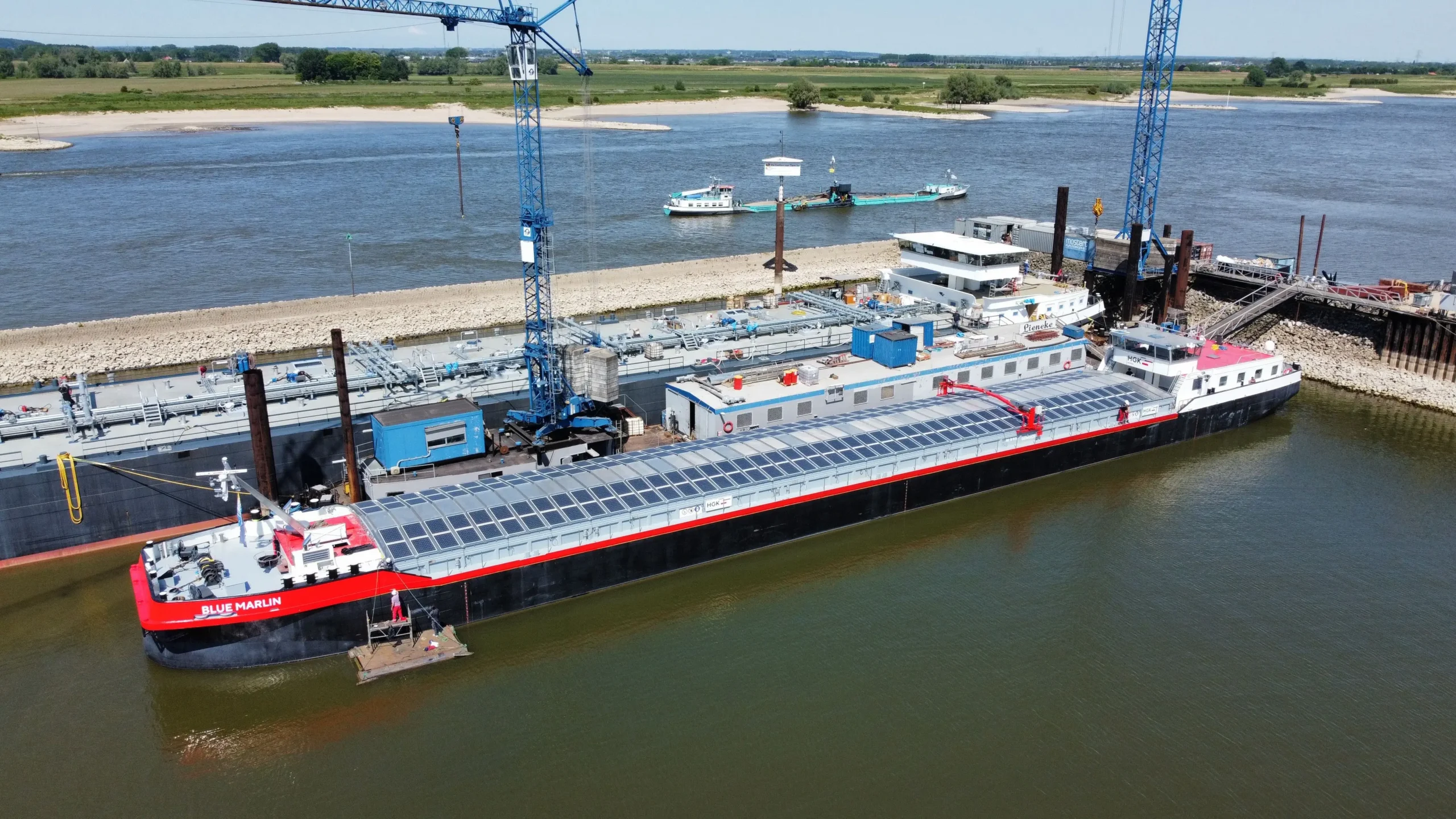
MS Blue Marlin, Solar System for an Inland Vessel
The Blue Marlin has a highly advanced energy system. The 51 kWp solar array connects to the 400 V AC switchboard through a combiner cabinet. A bidirectional grid converter (400 V ↔ 500 V) allows solar energy to go directly to both the hotel load and the propulsion systems. In addition, the 120 kWh high-voltage battery handles peak-shaving. This means propulsion and auxiliary systems can share power efficiently, without the need for an extra low-voltage ESS. As a result, fuel consumption goes down while solar utilization and operational flexibility go up.
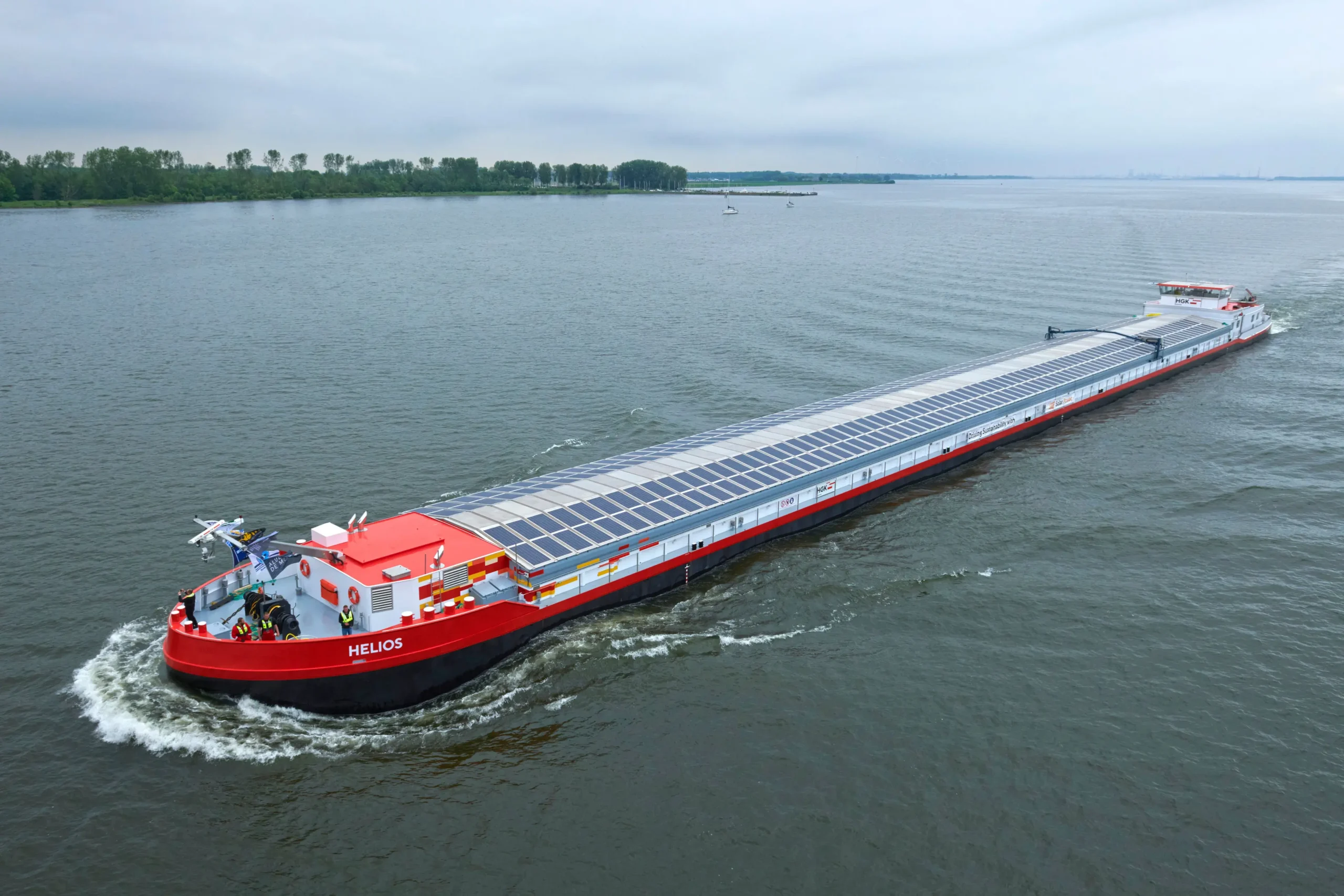
MS Helios, World Record Solar System on an Inland Ship
The Helios has a straightforward solar setup that is also very robust. The 117 kWp solar array feeds into a combiner cabinet connected directly to the 400 V AC switchboard for the hotel load. A 135 kVA energy storage system with 109 kWh of lithium batteries keeps the grid stable and stores excess solar power. As a result, the generator runs less and fuel consumption drops, while onboard systems stay reliably powered.
In October 2024, the Helios was officially recognised by the Guinness World Records. It became the inland vessel with the largest solar installation in the world, a milestone that shows what maritime solar can achieve.
Solar Power for Deep Sea Bulk Carriers
Together with research institute TNO, Wattlab is developing solar systems for ships in deep-sea bulk carrier conditions. The goal is to design and test a version that can handle the extreme mechanical loads of bulk carrier operations. In addition, the project works on reducing system costs to shorten payback periods. A modular battery integration concept is also being developed. The project runs from January 2026 to July 2027 and is co-funded by the EU's Just Transition Fund (JTF) through the Rijnmond programme.


Solar Flatracks for Seagoing Ships
Together with shipping company Vertom, Wattlab developed and demonstrated its modular Solar Flatrack system for seagoing vessels. The project included a full-scale installation of 44 Solar Flatracks to validate solar-energy production, fuel savings and system durability under real operating conditions. It also focused on optimising the product and production process, ship integration, regulations and the commercial business case. The project ran from June 2024 to May 2025 and was co-funded by the EU's Just Transition Fund (JTF) through the Rijnmond programme.
Latest news
Follow our projects in the newsroom →Interested in solar for your vessel?
Get in touch with us →