Wattlab's SolarDeck: ready to expand into seagoing shipping.
The pilot is done, the results are good, and Bo Salet is ready to talk about what comes next.
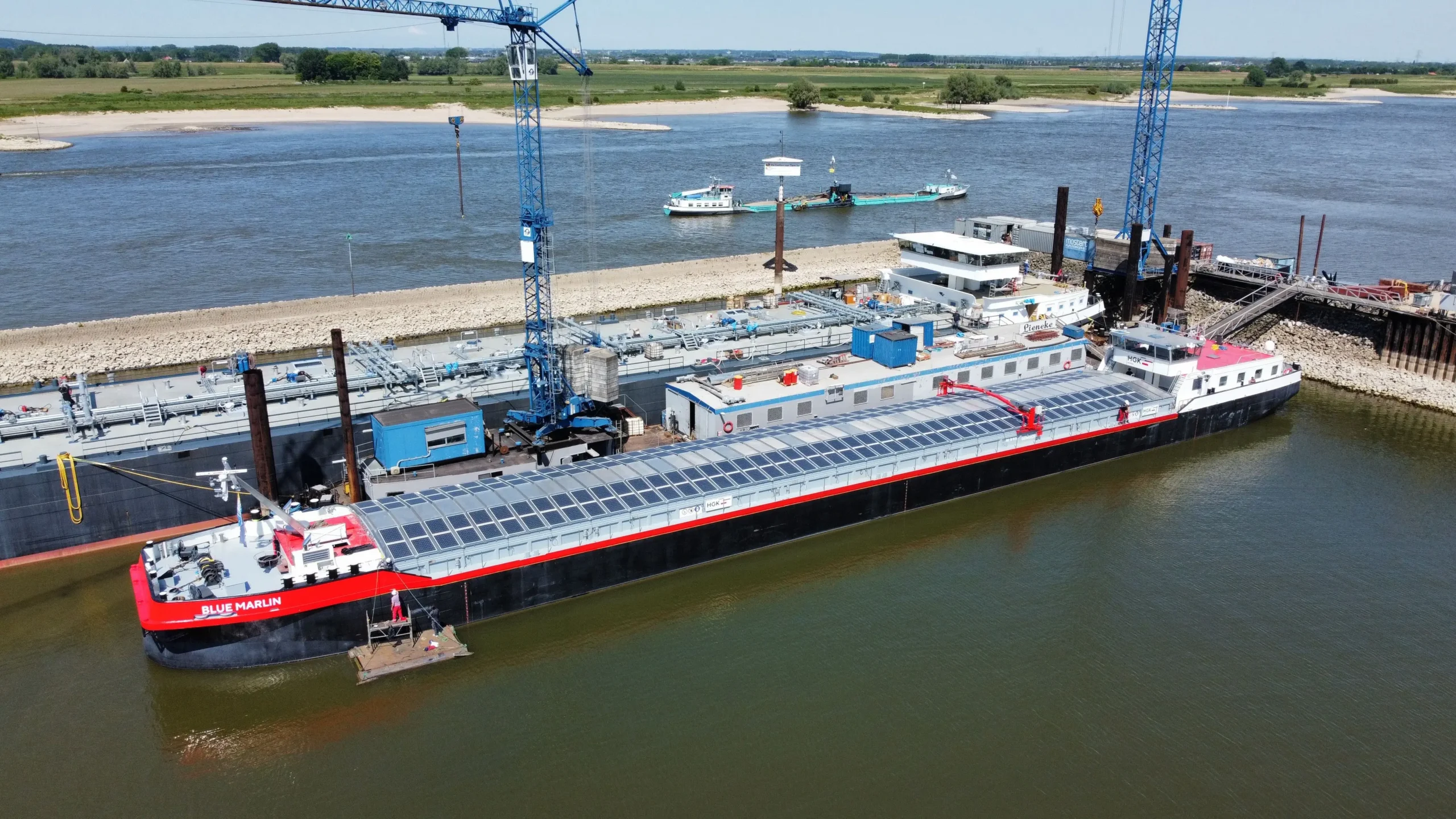
Wattlab already holds a Guinness World Record for the largest solar panel installation on an inland vessel. But rather than sit back, the Rotterdam-based start-up has spent the last year quietly working on something new: bringing solar power to seagoing ships. The product is called SolarDeck, and the first pilot is now done. We caught up with founder and CEO Bo Salet to find out how it went.
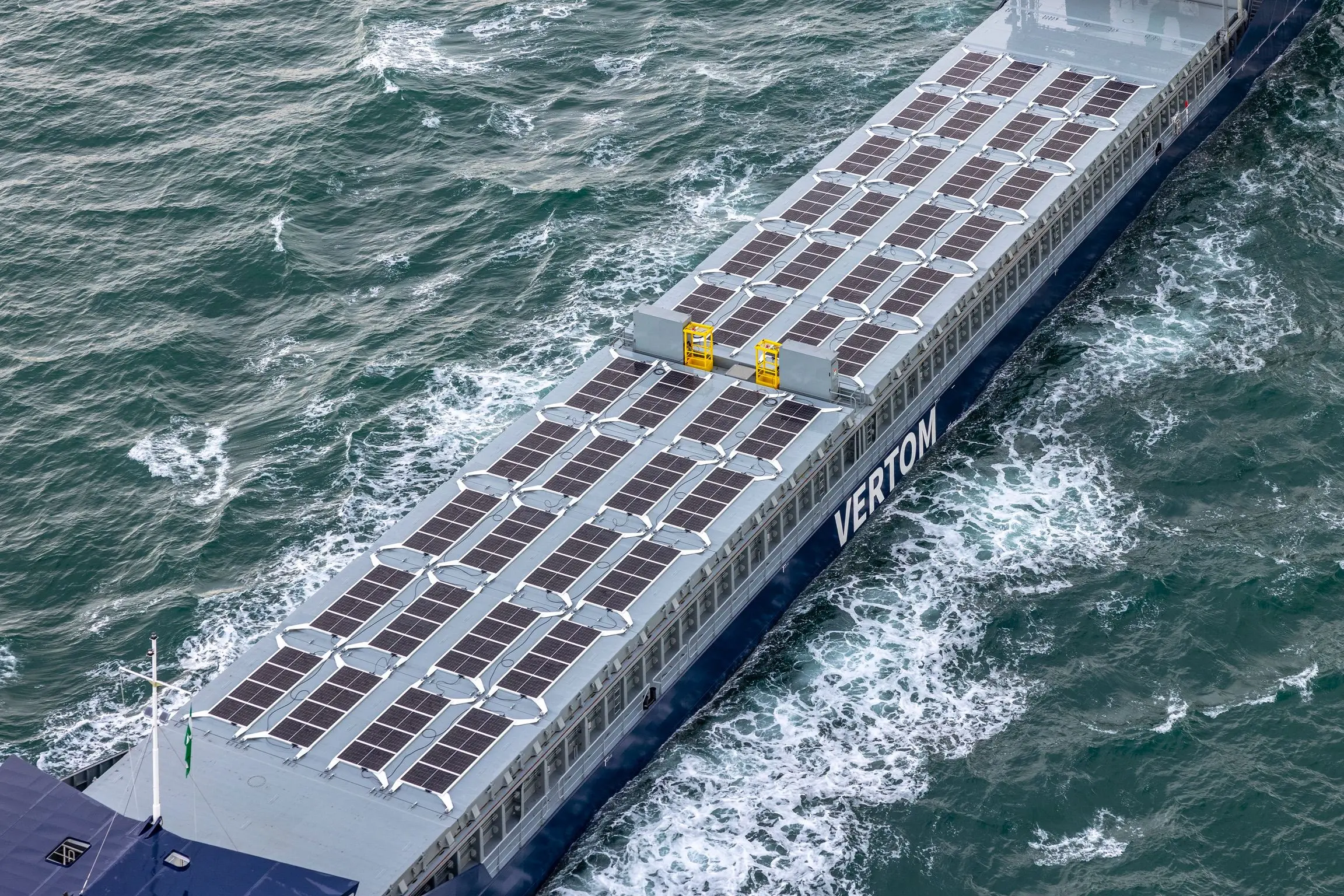
The pilot ran from May 2024, with two main partners: TNO, the Dutch research organisation, and Vertom, who put one of their vessels at Wattlab's disposal: the 7,280 DWT dry cargo ship Anette. The EU chipped in too, through the Just Transition Fund. It was a proper test: real conditions, real sea states, real crew.
So how did it go?
"TNO confirmed that the power output is in line with what we expected," Bo says. "That's the main thing. The design also helps — salt water drains freely from the panels, so you don't get that crust build-up that kills performance. And the Anette hit some rough weather during the pilot. Nothing broke. No damage at all."
"There are some parts that need fine-tuning, but there are absolutely no red flags."
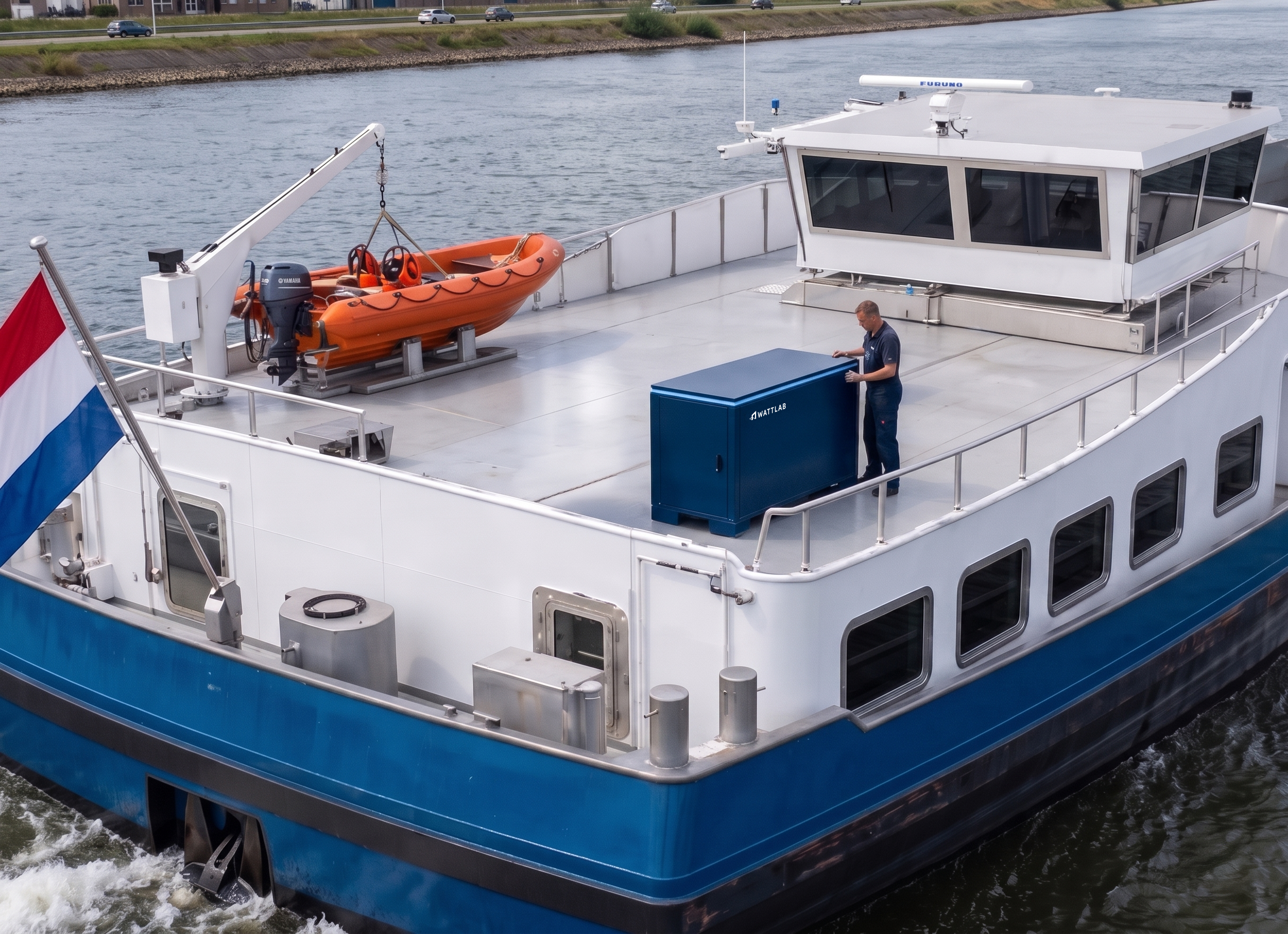
Safety came up a lot in testing too. The SolarDeck is a stand-alone system, and if a cable breaks, it shuts down on its own. There's no live current on a damaged cable. "It's inherently safe," Bo says. "Same logic as our inland product, just adapted for the sea."
What about the crew?
Solar panels aren't exactly known for being tough. So Wattlab asked the Anette's crew to treat the SolarDeck like any other part of the deck — no special treatment. Fresh water rinses, regular soap, even heavy-duty acidic descaling liquid. The panels kept working throughout.
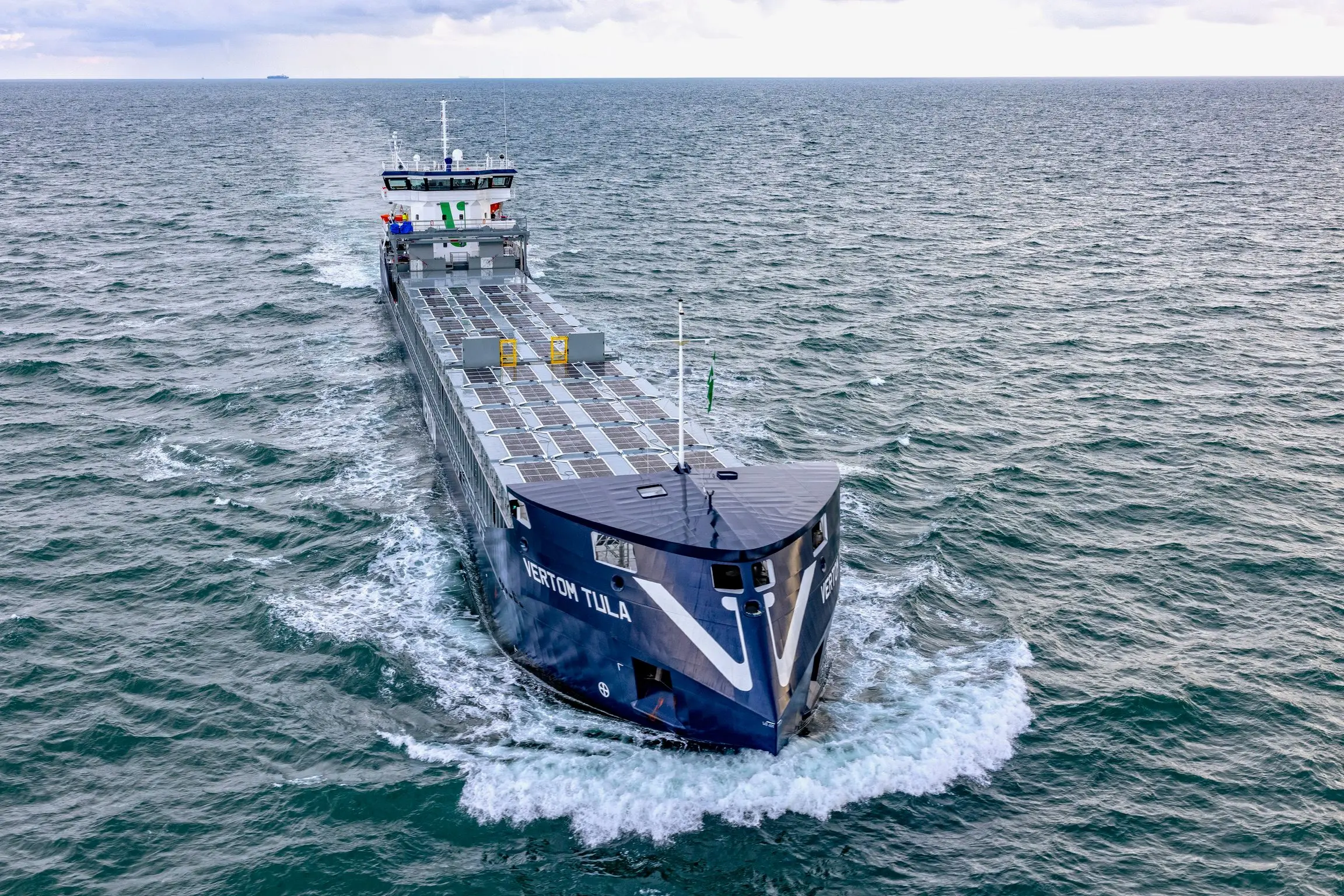
SolarDeck on Vertom's MV Anette, 2024.
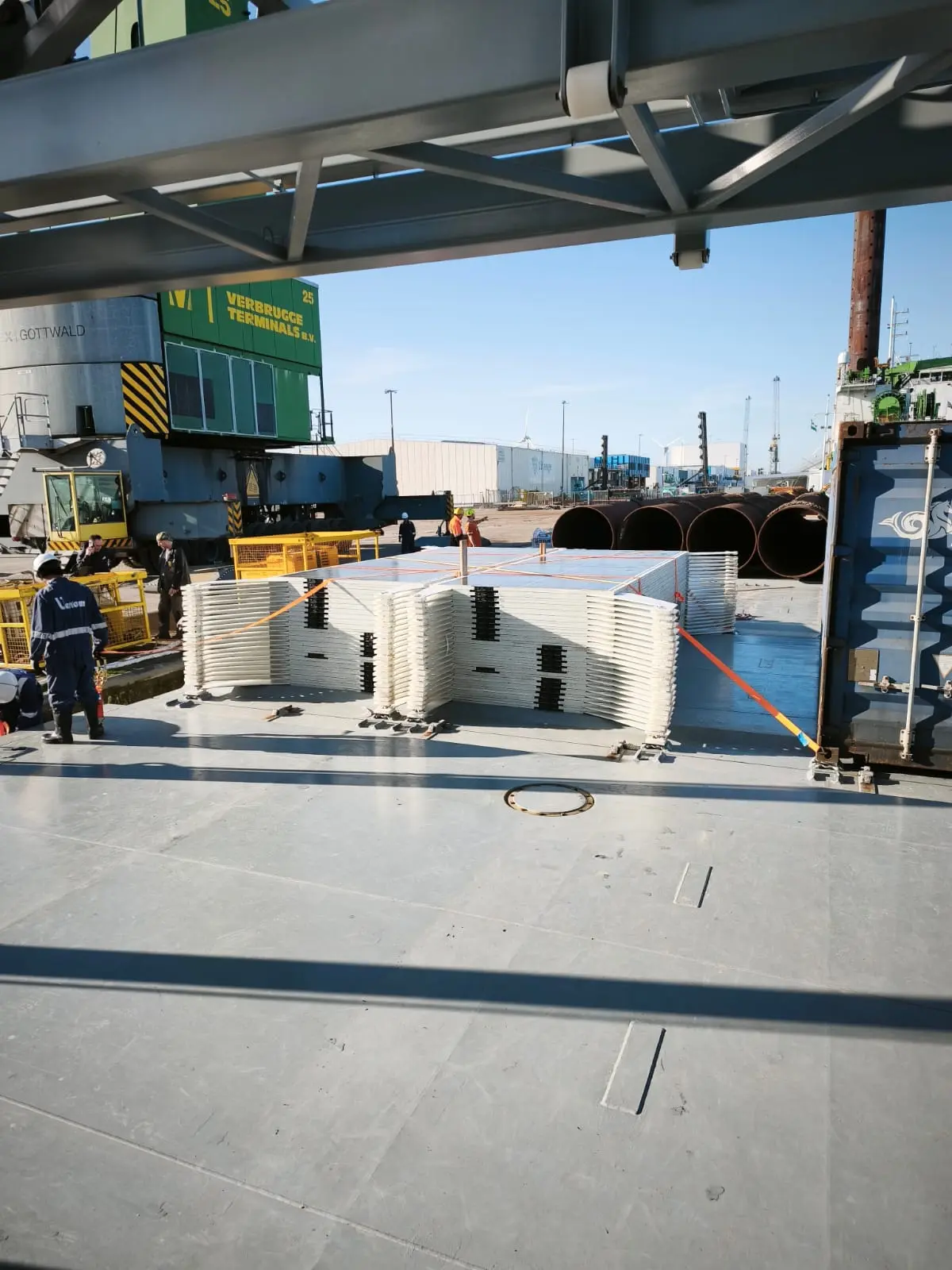
Cargo operations were also a concern. Nobody wants solar panels that get in the way of loading and unloading. But the SolarDeck is thin enough to fit between two stacked hatches. Disconnecting the cables takes about two minutes per edge. And if a ship needs to carry a deck load, like offshore wind blades, the panels can be removed and stacked within the volume of a single 20-foot container. They're designed around standard container twist lock fittings, so the crew can handle it themselves.
What's next?
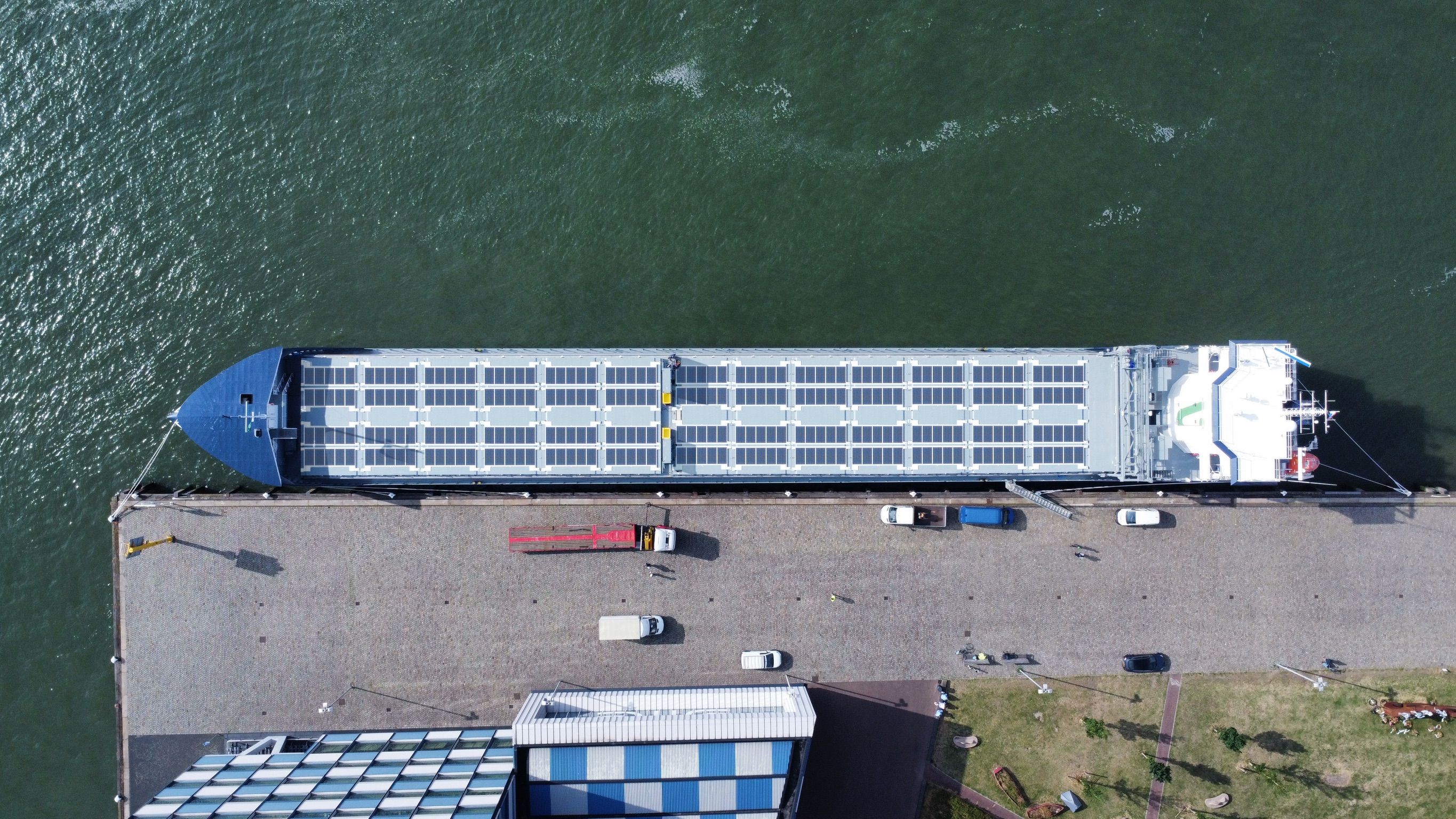
"We're moving to full scale," Bo says. "A vessel with the entire deck covered. We'll be delivering it before the summer, again with Vertom." That's a step up from one module to a full ship. It's a big moment for the product.
Does the business case hold up?
The numbers
Based on the pilot, Wattlab predicts a fuel reduction of 30 MT and a CO₂ drop of 96 MT per vessel per year. ROI sits at around four to five years, not taking any subsidies into account.
Bo also points out something that doesn't come up enough: older ships are actually a better fit. "The older the vessel, the less efficient its generators. So the savings are even bigger. And because the SolarDeck isn't a permanent installation, you can simply lift it off and move it to the next ship. That makes it a good fit even for owners with mixed or ageing fleets."
For shipowners watching their EEXI and CII scores, or trying to manage EU ETS and FuelEU costs, the timing feels right. Solar on seagoing vessels isn't a future idea anymore. Wattlab just ran the pilot to prove it.
Ready to reduce your vessel's emissions?
No obligations. We'll calculate your fuel savings and ROI for free.
Get in touchFrom the newsroom
Related articles